I commend United Airlines for all of its innovation as of late, particularly when it comes to the passenger experience. Along those lines, the airline recently took delivery of its first Airbus A321XLR, which is the new long range, narrow body jet that’s becoming increasingly popular with airlines.
This plane has all-new cabins, including a new business class (which isn’t as good as on wide body planes, but also, that’s to be expected). Several weeks ago, we unofficially learned about another new product that may be introduced on these planes. There’s now an update, as the airline has officially announced it — however, I’m not sure it’s as positive of a development as we’re being led to believe.
United plans a unique A321XLR economy seating concept
United’s Airbus A321XLRs are officially configured with 152 seats, with 20 seats in business class, 12 seats in premium economy, and 120 seats in economy. That’s a fairly low capacity plane, but United wants to get that number down to 150 seats, by eliminating two seats in economy.
How does the airline plan to accomplish that? Well, the plan is essentially to block two seats in economy (specifically, Economy Plus), by introducing an intra-Europe business class style hard product. The idea is that given the 3-3 configuration, one row of six seats would have two center seats blocked, and as long as there’s a physical divider in there so the seats can’t be used, that would technically get the capacity down to 150 seats.

Funny enough, while the details of this were only leaked some number of weeks back, this had been hiding under our noses all along. If you look at the initial United A321XLR seat map shared by JonNYC back in September 2025, you’ll see that the row immediately behind the exit row appears to have two blocked seats.
United says it will put these seats on sale later this year, and it remains to be seen how they’ll be monetized. Presumably these seats will get the same service as everyone else, so if they’re otherwise Economy Plus, will they be available at an extra cost over standard Economy Plus seats, available on a first come, first served basis, or what?
For now, this feature will be exclusive to the A321XLR, though the airline is also “exploring offering these types of seats on other aircraft types in the future.” Here’s how United Chief Commercial Officer Andrew Nocella describes this decision:
“We’re investing nose-to-tail across our fleet and giving customers choice and value in every cabin. The XLR is our newest aircraft and not only offers all-aisle access lie-flat seats in United Polaris® but now also includes seats in Economy Plus with extra leg and elbow room. Our customers are going to love all these new options.”
Is United really going to fly A321XLRs with four flight attendants?!
United is trying to market this as something that’s motivated by improving the passenger experience, but let’s be clear about what’s going on here — this is about reducing flight attendant staffing.
Under FAA regulations, airlines need to have a minimum of one flight attendant for every 50 seats. So a 150-seat plane needs three flight attendants, and a 152-seat plane needs four flight attendants. The added twist is that if planes have suites with doors, they require an extra flight attendant, meaning those numbers then go to four or five flight attendants.
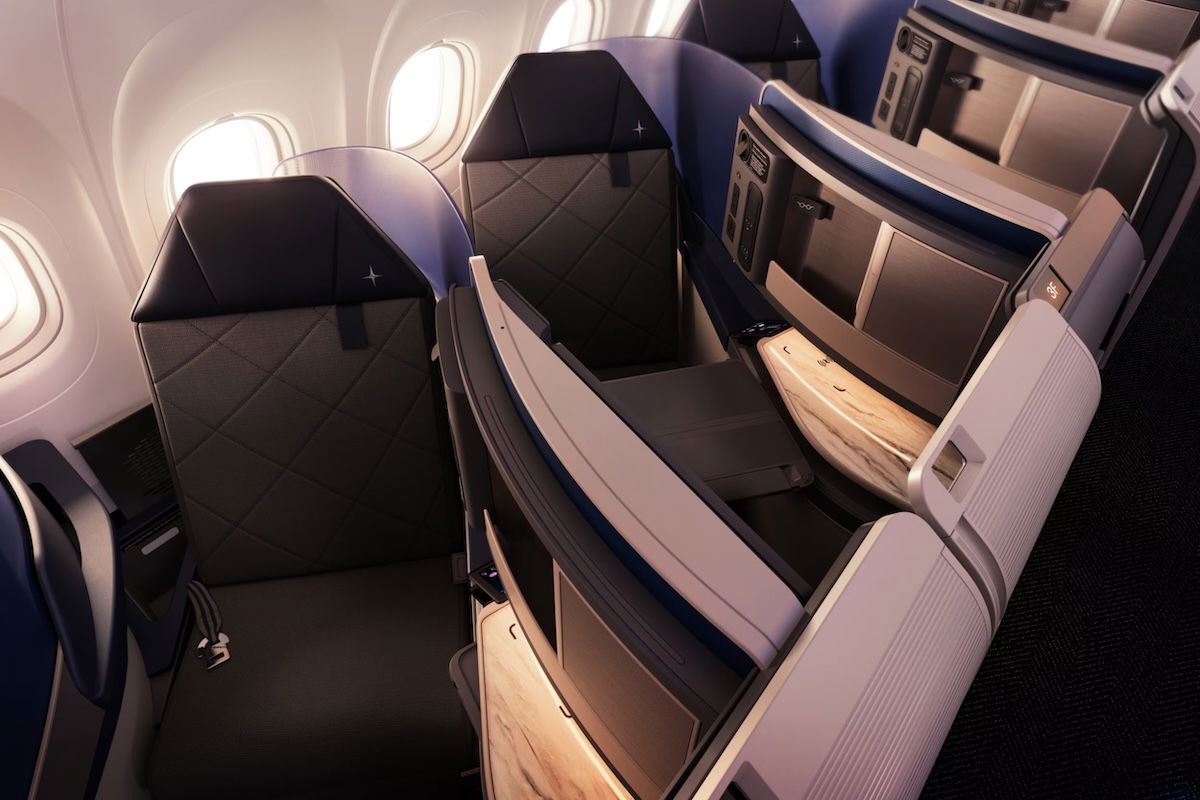
Obviously United doesn’t want to pay for an extra flight attendant for just two extra seats. But here’s the elephant in the room — does United really plan to fly the A321XLR with just four flight attendants?!
If a half decent customer experience matters, logically you’d want to staff this plane with at least five flight attendants. Think about it — these planes will be operating long haul, international routes. You need two flight attendants to work the business class cabin, with one in the galley, and one in the aisle.
That leaves two flight attendants to serve 12 premium economy passengers and 118 economy passengers. If that’s actually the staffing level United is aiming for on a consistent basis, get ready for the worst service in United’s international fleet.
The reality is that the economics of these narrow body planes on long haul flights are challenging, and I get how costs have to be controlled, especially with flight attendants now having a costly new contract.
Is that what’s actually going on here? Well, United suggests that it will have five flight attendants on most A321XLR routes, but not all. United plans to use these planes exclusively for long haul flights (these aren’t intended as domestic transcon planes), so I do find it kind of wild to schedule flights with fewer than five flight attendants.
In theory, there would be value to getting these planes certified down to four seats, so that in the event that a crew member calls in sick at the last minute, the airline can still fly the plane with four flight attendants in an emergency. At the same time, consistently giving up two revenue seats for such a possibility seems quite costly, unless the airline thinks it can generate significantly more revenue with these seats. However, that’s not what’s going on here, as the airline has confirmed it will staff some flights with four flight attendants.
American’s A321XLRs have 155 seats, so they’re required to have five flight attendants minimum, and if I’m not mistaken, they’re often staffed with six flight attendants.
Bottom line
United Airlines is planning a unique concept for its Airbus A321XLRs, whereby the airline will block two center economy seats, and essentially create an intra-Europe business class style hard product. While United suggests that this is intended to improve the passenger experience, the goal is to get the seat count down from 152 seats to 150 seats, so that minimum staffing can be reduced from five flight attendants to four flight attendants.
This isn’t just being done as a worst case scenario contingency plan in case one flight attendant calls in sick. Instead, the airline does in fact plan to staff some of these A321XLR flights with just four flight attendants. For flights where that’s the case, expect service to be really slow.
What do you make of United’s unique A321XLR seating concept?