In early 2025, American Airlines executives shared their vision to once again make the airline more premium, given the carrier’s lagging financials, compared to rivals Delta and United. For so long, American executives were convinced the airline could just compete on schedule and price, but that strategy hasn’t turned out to be a success.
As we approach 18 months of American’s attempted turnaround, just how far has the airline come? While I recognize some progress has been made, I think we also have to be realistic about what has actually changed vs. what has been promised, and how the current reality compares to that of competitors.
Before I get into this, let me say that I think the difference between US carriers isn’t necessarily as pronounced as some like to claim — it’s not like Delta is Singapore Airlines, and American is Ryanair. However, airlines need a bit of momentum and mojo to convince all parties (investors, employees, and customers) that things are changing, and I’m not convinced American actually has all that much to show for its efforts as of now.
Is American Airlines actually better than we think?
Gary at View from the Wing writes a post titled “American Airlines Is Better Than You Think After 18 Months Of Changes. It Still Needs A Premium Identity.” However, I think he’s being a bit too charitable in terms of how far he perceives that the airline has come so far. He’s on the one hand suggesting that the airline is already better than we think and he doesn’t think they get enough credit for what they’ve done in the past 18 months, and then goes on to highlight all of the things that American is promising to do in the future.
Look, I actually think some of American’s leadership team at the moment is pretty good (with CEO Robert Isom being the major exception, not because he isn’t a nice guy, but because he’s not a leader), and I do think they’re moving in the right direction. However, ultimately customers fly an airline because of what they’re experiencing now, and not because of what they’re being promised in the future.
For example, Gary calls American’s new lounges “absolutely gorgeous,” and then points out all the airports that will be getting new lounges in the future. Yes, Charlotte and Miami will get new Flagship Lounges, and Austin, Chicago, and Nashville, will get new Admirals Clubs… but when?
To use my home airport as an example, nobody has actually been able to share any details about this alleged new Flagship Lounge, and airport committee documents don’t show any approval for such a concept. It’s possible I’m missing something, but the “coming soon” banners all over the airport about a new Flagship Lounge strike me as a bit of a stretch.
Gary gives credit to American for its new Philadelphia Flagship Lounge. Yes, it’s good to have one at all, but it’s way too small, and design wise, it pales in comparison to a Delta One Lounge. Gary’s own review of the lounge claimed that it’s “stunning — if you can get a seat.” Seriously this is American’s “absolutely gorgeous” new creme de la creme of lounges…
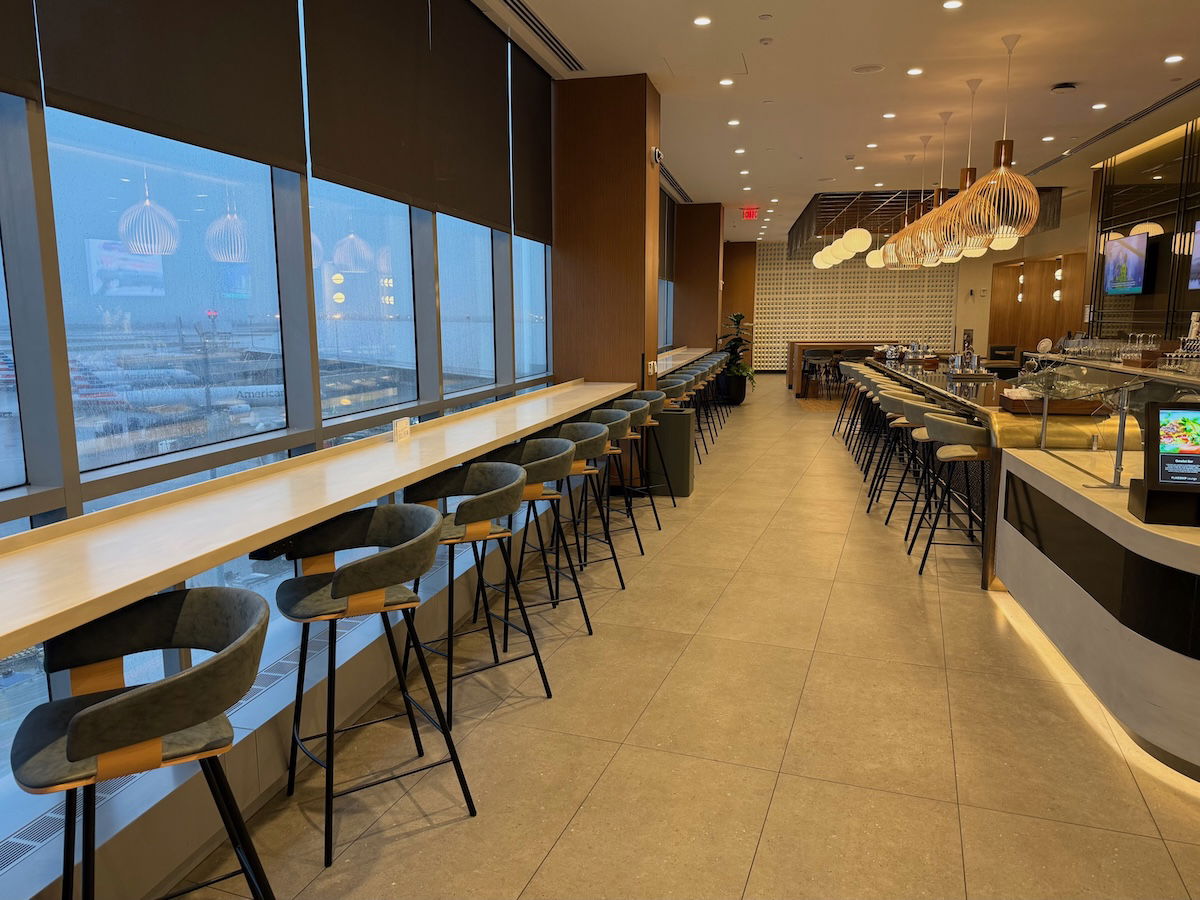
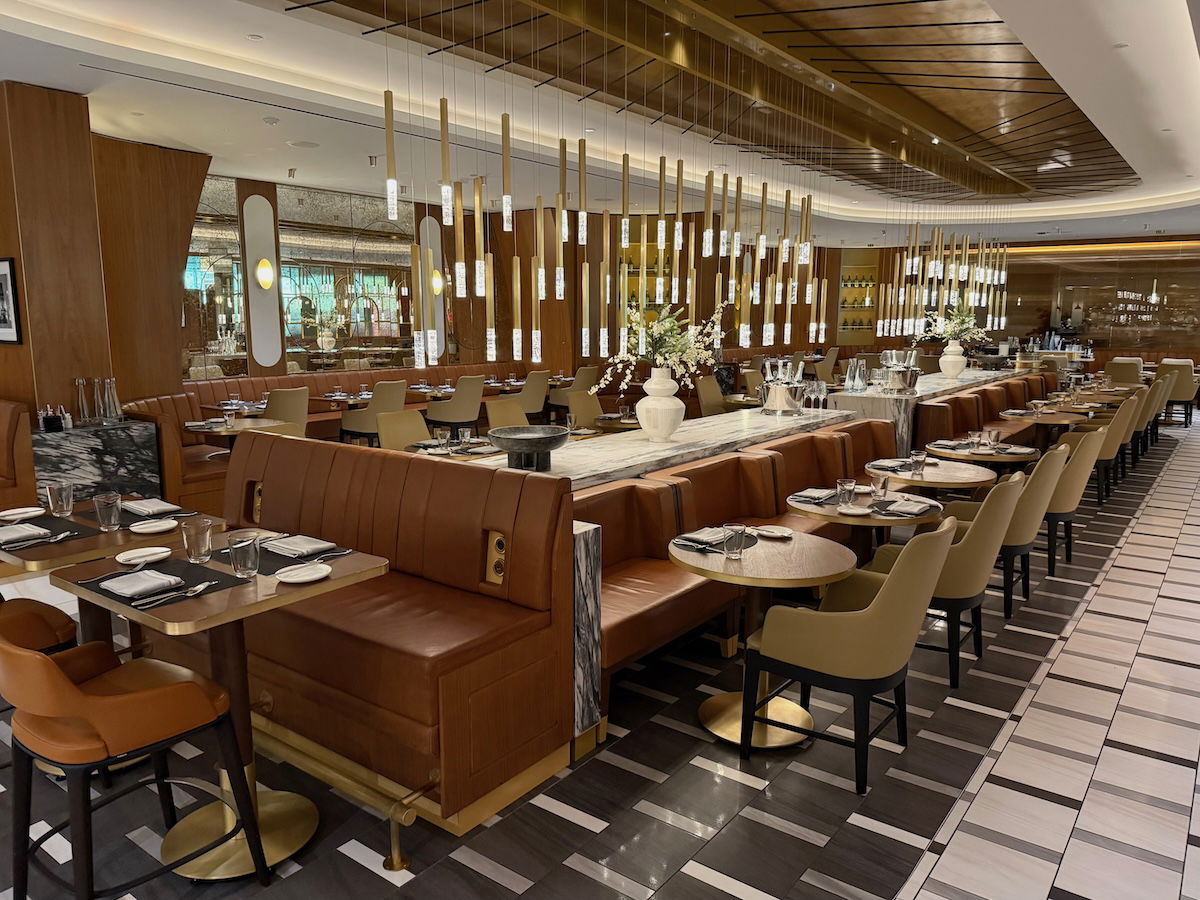
…while below that is the dining area looks like at the Delta One Lounge New York. To me, one looks like an Admirals Club, the other looks like a nice hotel restaurant.
And on that topic, the above is the nicest Flagship Lounge in terms of design. Most Flagship Lounges still have the old design, where spaces look more like a waiting room in a doctor’s office.
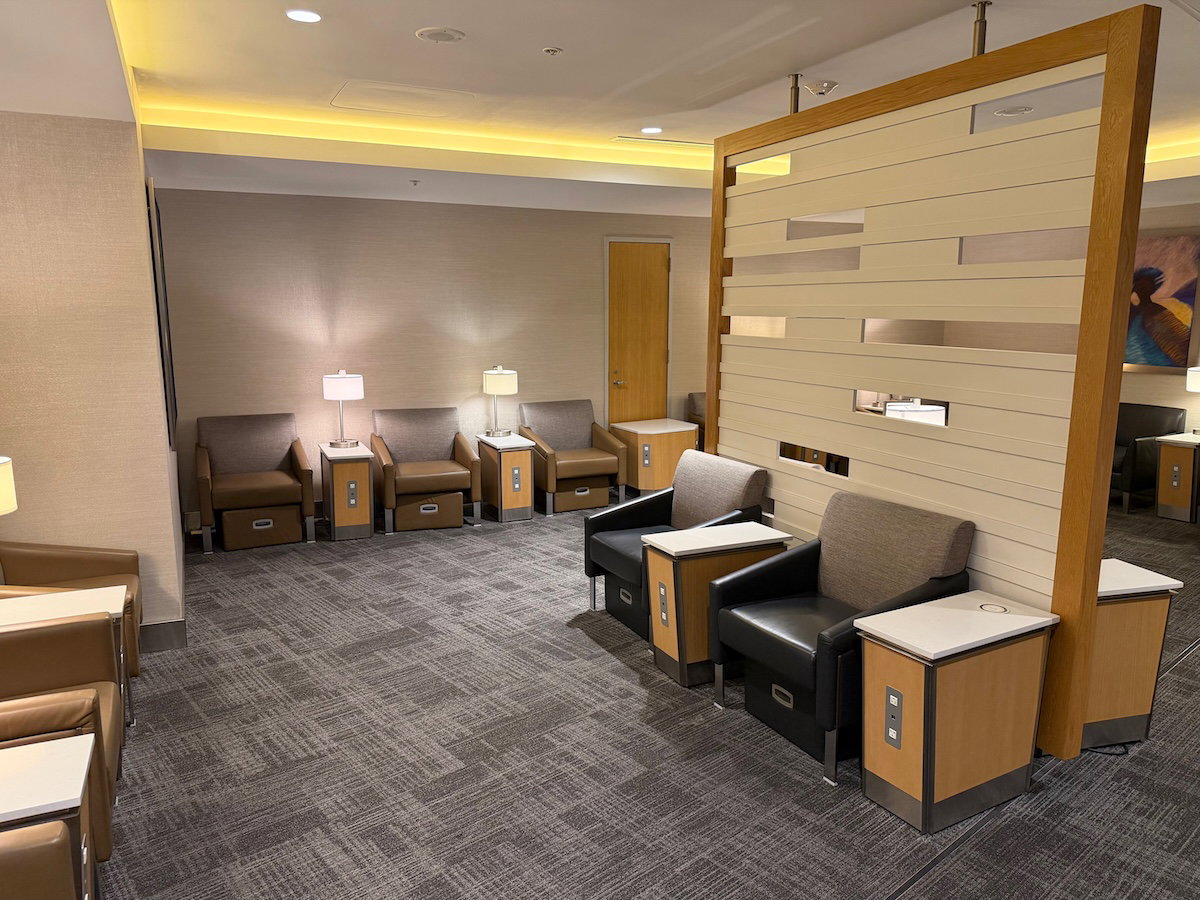
Speaking of American’s new design aesthetic, the airline revamped its lounge design in October 2022, nearly four years ago. How many Admirals Clubs have the new design, so far? By my count, that number is four. So that’s an average of around one lounge a year, and I don’t even know of any other new Admirals Clubs opening imminently with the new design (though I could be missing some)?
By the way, during that same time period, at least eight Delta Sky Clubs have opened with the latest design motif, and with a lot more square footage. I think this basically sums up my issue with Gary’s argument — yes, American is improving, but at the same time, competitors are improving at a faster pace. So the gap isn’t really narrowing, and ultimately we judge an airline based on its competitive standing, and not by any absolute metrics.
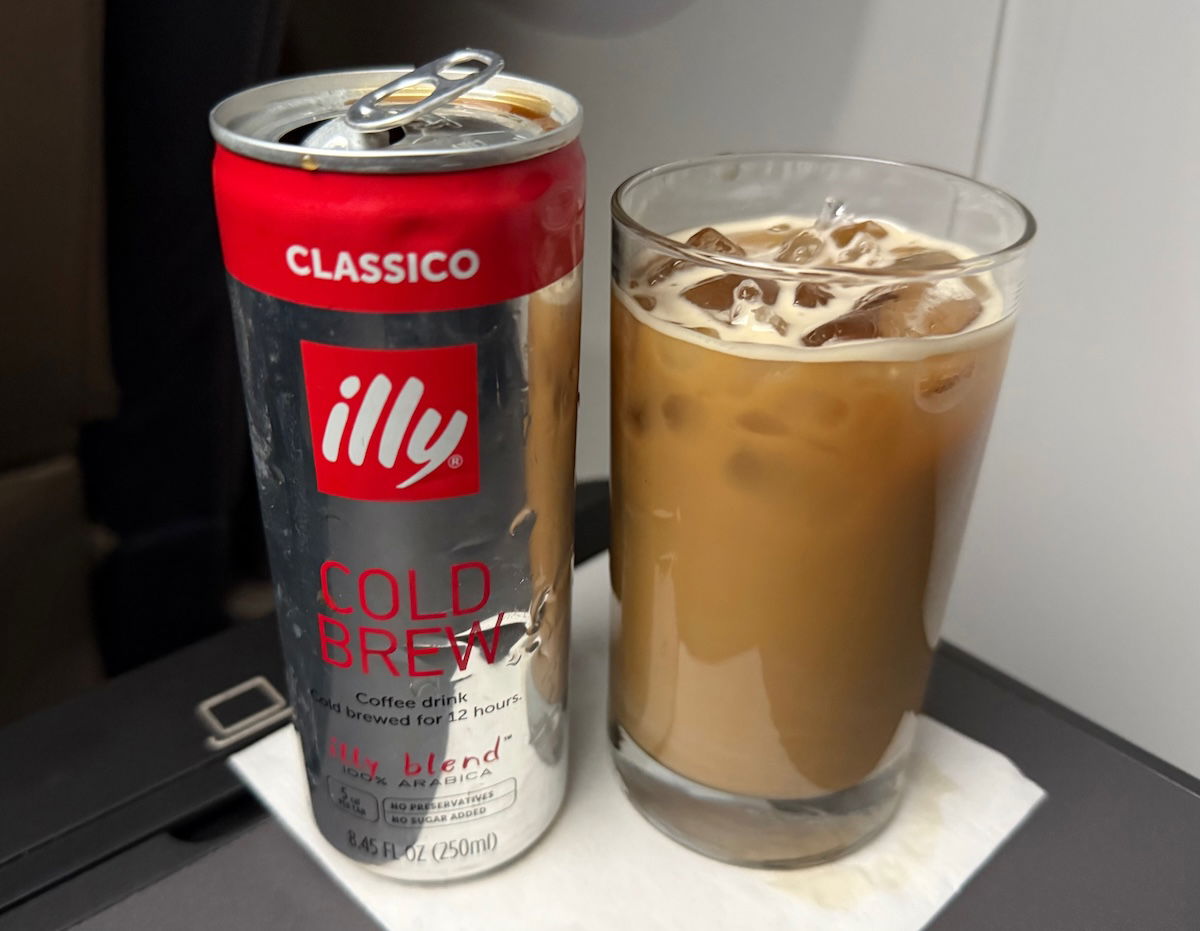
Gary points out how American has introduced Lavazza coffee. I love coffee, and I’m happy to see that as well. At the same time, Delta and United also have coffee partnerships, with more extensive offerings, with United having illy cold brew, and Delta having Starbucks espresso-based drinks in lounges. Again, even as American improves, it’s still behind.
The introduction of Bollinger champagne in business class is great, and matches what competitors have done. As usual, American was the last of the “big three” US carriers to announce a champagne collaboration.
Similarly, Gary points out how buy on board options have improved. Yes, that’s true, but they still pale in comparison to what you’ll find on United, for example, where there’s hot pre-order food available.
I could go on and on here, but my point is simple — this feels a bit to me like just giving out participation awards. Yes, things are moving in the right direction. However, these are almost entirely initiatives intended to narrow the gap with competitors, while they continue to move forward and lead the way.
And the argument can’t be made that the airline is better than people realize based on something that’s being promised in the future. Of course we don’t realize it, because it doesn’t exist.
American has one biggest and hardest hurdle to overcome
Gary talks about “what remains to be done,” and I agree with the core of what he says:
American Airlines needs a premium vision consistently articulated by the CEO and sold to employees so they know what kind of product and service they’re supposed to deliver, so they buy into providing it, and so they understand that doing so is linked to the success of the company (they’re in an important battle) and for profit-sharing. Middle management hasn’t had the incentive for a decade to sweat the small details of product. The frontline hasn’t been told that the service they offer matters.
They need widebody aircraft, having retired international-capable Boeing 757, Boeing 767, and Airbus A330s during the pandemic in the name of ‘simplifying’ the fleet – and lost out on the boom to Europe as a result. Just offering service to South American, joint venture partner hubs, and summer seasonal Europe isn’t enough and doesn’t give members the flights that inspire them to spend on card either.
The issue I have is that I don’t think he’s doing enough to emphasize how big these two issues are. If you ask me, 90% of American’s issues aren’t about whether they have brisket in first class or which lounges they’re promising to open, but instead, about having a culture where employees genuinely feel connected to the mission of the company, and taking care of customers.
I think Gary is a little too clinical in his assessment of the culture problem. It’s essentially “the CEO has to say X, so that employees do Y.” I think the airline is too far gone on that front.
American CEO Robert Isom has lost the respect of frontline employees. That’s partly due to the lack of performance while he has been CEO, and it’s partly just a bigger symptom of how the “America West boys” have been running things for decades.
Real talk — when is the last time that we saw a culture change at an airline with a CEO who employees don’t actually respect? To be clear, that’s not me saying that employees don’t respect him, it’s employees saying it — flight attendants issued a first-ever vote of no confidence in Isom, and pilots have made it clear that leadership failures are unacceptable. This isn’t a rhetorical answer — I’d love if anyone can think of a single time in the airline industry such a culture change happened under an existing, unpopular CEO.
If Isom says tomorrow “hey guys we’re premium now, let’s all do our best, yay,” it won’t be taken seriously. After all, keep in mind that Isom’s narrative for so long has been to suggest that nothing is wrong, and employees should just keep doing what they’re doing.
Culture changes start when there’s new leadership that makes the strategic goals very clear from the beginning, and gets employees genuinely excited. We’re talking Richard Anderson at Delta, Oscar Munoz at United, etc.
I am convinced that American will not have a proper turnaround until it has a CEO who employees are excited about, and who understands the importance of culture and service. But American’s board has been asleep for years, and it doesn’t look like anything is changing there. American needs a people person as CEO, and not just a CFO or COO.
But seriously, this the single biggest thing American needs to change the passenger experience, and the longer this is pushed off, the more American’s turnaround will be delayed. All the other improvements only get you so far when a company’s culture is broken.
And yes, then there’s American’s completely uninspiring long haul route network, which is also hard to fix in the coming years, given American’s lack of aircraft on order. That’s also something that can’t be solved overnight, and will continue to put American at more of a disadvantage, as competitors take delivery of more planes.
I say all of this because I care about American — living in Miami, it’s the carrier that’s easiest for me to fly, and there’s little I’d love more than to see American actually be a great airline. American has been my primary airline for well over 15 years now. A transformation is absolutely possible, but without a culture reboot (which requires a new CEO), it’s a pipe dream.
There are so many people at American who are doing their best to turn the airline around. The issue is that they report to the CEO, and therefore they are in a situation where they’re unable or unwilling to admit that not having a CEO who motivates employees is one of the company’s biggest challenges.
Bottom line
It has now been close to 18 months since American executives laid out the vision for the airline to become more premium. Has progress been made? Absolutely. Have most of the changes simply been copying competitors, with moves that should’ve been made years ago? Yes. Are Delta and United also trying to improve at a fast pace, and arguably outpacing American? I’d say so.
But any positive changes are overshadowed by what hasn’t changed, which is American’s leadership at the very top. American needs a culture change, and when the CEO’s narrative is that everything is great and everyone should keep doing what they’re doing, it fails to address American’s single biggest disadvantage, which is service and culture.
What do you make of the progress of American’s transformation?