The Chase Sapphire Preferred® Card (learn more) and Citi Strata Premier® Card (learn more) are two of my favorite cards with annual fees of under $100. In this post, I’d like to compare the two cards, since I know many people try to figure out which of these two cards makes the most sense for them. And with the Sapphire Preferred’s June 2026 refresh, several of the head-to-head comparisons look different than they did before.
For what it’s worth, I don’t currently have either of these cards, though I have in the past. I do currently have the more premium version of each card — that includes the Chase Sapphire Reserve® Card (learn more) and Citi Strata Elite℠ Card (learn more).
Comparing the Chase Sapphire Preferred & Citi Strata Premier
The Chase Sapphire Preferred and Citi Strata Premier have a lot of similarities, like reasonable annual fees, great rewards structures, access to transferable points, and hotel credits. However, the cards also have major differences, so let’s compare various aspects of them.
How do welcome bonuses compare?
Both cards offer great welcome bonuses for new cardmembers:
- The Chase Sapphire Preferred is offering a welcome bonus where you can earn 100,000 Ultimate Rewards points after spending $5,000 within the first three months, which is worth $1,700 at my 1.7 cent valuation
- The Citi Strata Premier is offering a welcome bonus of 60,000 ThankYou points after spending $4,000 within the first three months, which is worth $1,020 at my valuation
Winner: I value Ultimate Rewards points and ThankYou points roughly equally. The Chase Sapphire Preferred is the clear winner, and at 100K versus 60K points, it’s not particularly close, though the Citi Strata Premier does have the lower spending requirement.

How do eligibility & approval odds compare?
Credit card issuers have all kinds of rules when it comes to approving people for new cards, and both of these cards have their fair share of restrictions.
The welcome bonus on the Chase Sapphire Preferred is once per lifetime on this exact card. You may not be eligible if you’ve previously held the Sapphire Preferred or received its new cardmember bonus, and you can’t be approved if you currently have the card open. Fortunately each Sapphire card is evaluated independently, so holding a different Sapphire card doesn’t itself disqualify you.
There’s also Chase’s 5/24 rule, whereby those who have opened five or more new card accounts in the past 24 months wouldn’t be eligible. However, this no longer seems to be consistently enforced.
Meanwhile, the welcome bonus on the Citi Strata Premier isn’t available to those who have received a new cardmember bonus on this exact card in the past 48 months.
Winner: While the answer will vary based on your specific situation, generally speaking, the Citi Strata Premier is easier to be approved for. Citi doesn’t have a 5/24 rule, and its bonus restriction is a rolling 48-month clock. If it has been more than four years since your last Citi Strata Premier (or old Citi Premier) bonus, you’re eligible again. The Chase Sapphire Preferred’s bonus, by contrast, is once per lifetime on the card.
How do annual fees compare?
The Chase Sapphire Preferred has a $95 annual fee, while the Citi Strata Premier has a $95 annual fee, neither of which are waived for the first year. On both cards, you can add authorized users at no extra cost.
Winner: This is a tie, since both cards have the same annual fees. And notably, both cards offer a $100 annual hotel credit that can more than cover that fee. More on the differences between those credits below.
How do bonus categories compare?
Both cards offer bonus categories for purchases that are popular with consumers, but the rewards structures are very different.
The Chase Sapphire Preferred offers the following rewards structure:
- 5x points on travel booked through Chase Travel℠
- 3x points on dining purchases
- 3x points on online grocery purchases
- 3x points on select streaming services
- 3x points on gas station and EV charging purchases
- 3x points on vacation rentals
- 2x points on travel purchases
- 1x points on all other purchases
The Citi Strata Premier offers the following rewards structure:
- 10x points on hotels, rental cars, and attractions booked through the Citi Travel Portal
- 3x points on dining purchases
- 3x points at supermarkets
- 3x points on gas station and EV charging purchases
- 3x points on airfare purchases
- 3x points on other hotel purchases
- 1x points on all other purchases
Winner: It depends on your spending patterns, but I think the Citi Strata Premier’s bonus categories are more well-rounded. That being said, the Chase Sapphire Preferred has improved significantly in this area and is now much more competitive — as of June 2026 it matches the Strata Premier’s 3x points on gas and EV charging, and adds vacation rentals. The Citi Strata Premier’s remaining edge is breadth: full supermarket coverage (versus online groceries only), plus 3x points on airfare and hotels, versus the Sapphire Preferred’s 2x points on travel rate. In particular, both cards are excellent for dining purchases.
How do rental car & travel protection compare?
One potential perk of getting a travel rewards card is valuable travel protection:
- The Chase Sapphire Preferred offers primary rental car collision damage waiver coverage both in the US and abroad, and excellent flight delay, trip cancelation, and lost baggage coverage, plus emergency evacuation coverage as of June 2026
- The Citi Strata Premier offers some travel protection benefits, but they pale in comparison to what the Chase Sapphire Preferred offers with lower limits, and lesser rental car coverage
Winner: The Chase Sapphire Preferred wins by a long shot, because it offers excellent travel coverage.

How do annual hotel credits compare?
Both cards offer annual hotel credits, though the terms associated with them differ:
- The Chase Sapphire Preferred offers a $100 annual hotel credit (doubled from $50 as of June 2026) — make a hotel booking through Chase Travel, and you’ll receive a statement credit for up to $100 (there’s no minimum spending amount required, so you could in theory book a $100 hotel room and get it covered entirely)
- The Citi Strata Premier offers $100 off a single hotel stay of $500 or more (excluding taxes and fees) when booked with Citi Travel®
While these credits are nice perks, one thing to keep in mind is that often you’ll find lower prices through other booking sources. On top of that, if you’re staying at a hotel with a loyalty program, generally, third party bookings (like those through Chase Travel or Citi ThankYou) won’t earn you points, elite benefits, etc.
Winner: As of June 2026, this one flips decisively to the Chase Sapphire Preferred. Both credits are now worth up to $100, but the Chase Sapphire Preferred’s has no minimum stay requirement, while the Citi Strata Premier credit requires a $500+ stay booked through Citi Travel. A $100 credit you can apply to a $100 stay beats $100 off a $500 stay.

How does the value of points compare?
Both Chase Ultimate Rewards and Citi ThankYou have transfer partners, and also let you redeem points as cash toward the cost of travel purchases.
Chase Ultimate Rewards points earned through the Chase Sapphire Preferred:
- Can be redeemed for up to 1.75 cents each toward the cost of a travel purchase through Chase Travel℠ with Points Boost
- Can be redeemed for up to two cents each toward the same purchases, if you instead have the Chase Sapphire Reserve through Chase Travel℠ with Points Boost
- Can be transferred to the below airline and hotel partners
Airline Partners | Hotel Partners |
|---|---|
Aer Lingus AerClub | IHG One Rewards |
Air Canada Aeroplan | Marriott Bonvoy |
Air France-KLM Flying Blue | World of Hyatt |
British Airways Club | |
Iberia Club | |
JetBlue TrueBlue | |
Singapore Airlines KrisFlyer | |
Southwest Rapid Rewards | |
United MileagePlus | |
Virgin Atlantic Flying Club |
Citi ThankYou points earned through the Citi Strata Premier:
- Can be redeemed toward the cost of an airfare purchase at the rate of 1.0 cents per point
- Can be transferred to the below airline and hotel partners
Airline Partners | Hotel Partners |
|---|---|
Aeromexico Club Premier | Accor Live Limitless |
Air France-KLM Flying Blue | Choice Hotels |
American AAdvantage | LHW Leaders Club |
Avianca Lifemiles | Wyndham Rewards |
Cathay Pacific Asia Miles | |
Emirates Skywards | |
Etihad Guest | |
EVA Air Infinity MileageLands | |
JetBlue TrueBlue | |
Qantas Frequent Flyer | |
Qatar Airways Privilege Club | |
Singapore Airlines KrisFlyer | |
Thai Airways Royal Orchid Plus | |
Turkish Airlines Miles&Smiles | |
Virgin Atlantic Flying Club |
As far as transfer partners go, I’m not sure there’s an obvious answer as to which program goes. I do like how Chase partners with World of Hyatt (though note that as of June 2026, Hyatt transfers at a 4:3 ratio on the Sapphire Preferred, with only the Sapphire Reserve keeping the 1:1 ratio), but aside from that, I think Citi almost has a wider variety of partners. I value both Chase Ultimate Rewards and Citi ThankYou points at 1.7 cents each.
Winner: While I personally value the points currencies roughly equally, I think Chase probably has the slight edge, thanks to the higher “cash-out” value of points toward travel purchases. However, I think the opposite argument could also be made.

How do card ecosystems compare?
One of the great things about getting a card that belongs to one of the major transferable points currencies is that there are card ecosystems that can really help you maximize points. In other words, you can get multiple cards that complement one another to maximize your rewards.
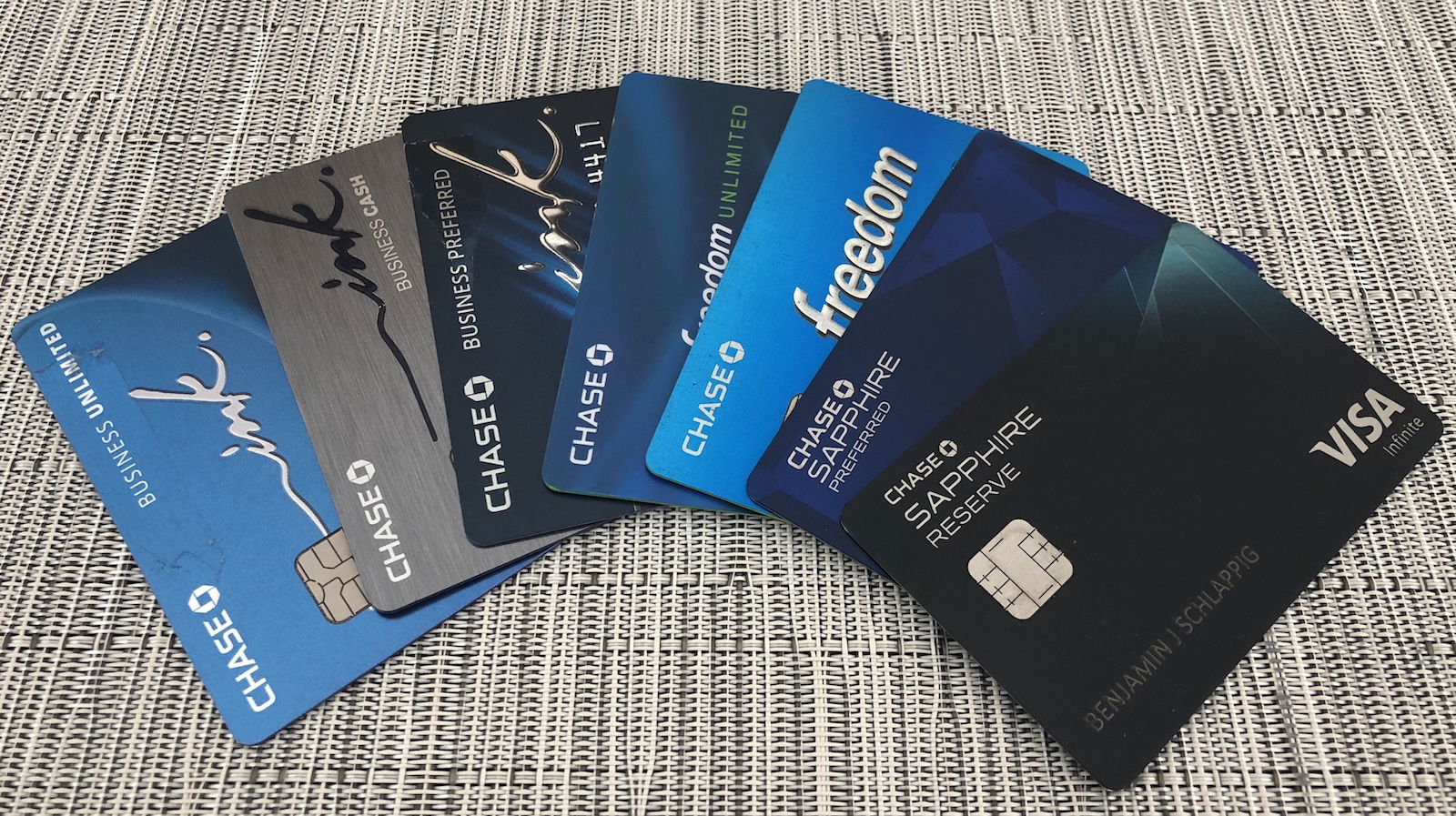
Chase Ultimate Rewards arguably offers the most robust points ecosystem. For example, you could complement the Chase Sapphire Preferred with the Ink Business Preferred® Credit Card (learn more), which is a $95 annual fee card that offers 3x points on the first $150,000 of combined purchases per cardmember year on travel, shipping purchases, internet, cable, phone services, and advertising purchases made with social media sites and search engines.
You could also complement the Sapphire Preferred with any of the following no annual fee cards to really maximize your points earning potential:
- The Chase Freedom Flex℠ (learn more) offers 5x points in rotating quarterly categories, on up to $1,500 of spending per quarter, plus 5x points on travel purchases through Chase Travel, plus 3x points on dining and drugstores
- The Chase Freedom Unlimited® (learn more) offers 5x points on travel purchases through Chase Travel, plus 3x points on dining and drugstores, plus 1.5x points on everyday spending
- The Ink Business Cash® Credit Card (learn more) offers 5x points on the first $25,000 spent in combined purchases each anniversary year on cellular phone, landline, internet and cable TV services, plus 2x points on the first $25,000 spend in combined purchases each anniversary year on gas stations and restaurants
- The Ink Business Unlimited® Credit Card (learn more) offers 1.5x points on all business purchases
The Citi Strata Premier does directly have great bonus categories that probably exceed those of the Chase Sapphire Preferred for most, and then there are no annual fee cards that can help you maximize your ThankYou points earning potential:
- The Citi Double Cash® Card (learn more) offers 1% cash back when you make a purchase and 1% cash back when you pay for a purchase (in the form of ThankYou points), and in conjunction with the Citi Strata Premier, rewards can be transferred to airline and hotel partners, which is a great opportunity, as this is a way to earn two ThankYou points per dollar spent on everyday purchases
- The Citi Strata℠ Card (learn more) offers 3x ThankYou points in a self-select category, which you can change quarterly; options include fitness clubs, select streaming services, live entertainment, pet supply stories, and cosmetic stories, barber shops, and hair salons
Winner: Chase really shines when it comes to the ability to create a portfolio of cards earning Ultimate Rewards points. Rather than only using one card to maximize points, you can use several cards, and you can pool points across them. That being said, Citi is quickly catching up in terms of being able to create a portfolio of cards, thanks to the potential of maximizing the Citi Strata Premier and Citi Double Cash, along with some other cards.
Bottom line
The Chase Sapphire Preferred and Citi Strata Premier are among the best cards with annual fees of under $100. Which card is better really depends on your specific spending patterns, and what you’re looking for out of a card.
As you can see, while the annual fees on the cards are the same, otherwise there are quite some differences between them, and each card shines in different areas. Honestly, I can see myself making an argument in favor of either card.
The Chase Sapphire Preferred is really well rounded. It has great bonus categories, a valuable $100 hotel credit that can offset the annual fee, and great travel and rental car protection. On top of that, the card shines if you’re looking to build a portfolio of cards, given the number of other cards that can potentially earn you tons of Ultimate Rewards points. The much bigger welcome bonus is also a big point in favor of this product.
However, the Citi Strata Premier is also great. The card has potentially better and more well-rounded bonus categories, it might be easier to get approved for, and the points give you a lot of flexibility. Complement it with the no annual fee Citi Double Cash, and you’ll also be earning 2x points on everyday spending.
You can’t really go wrong with either, though. Given the bonuses being offered by both cards at the moment, I think there’s big value in applying for both cards and seeing how they work out for you.
Do you prefer the Chase Sapphire Preferred or Citi Strata Premier?